


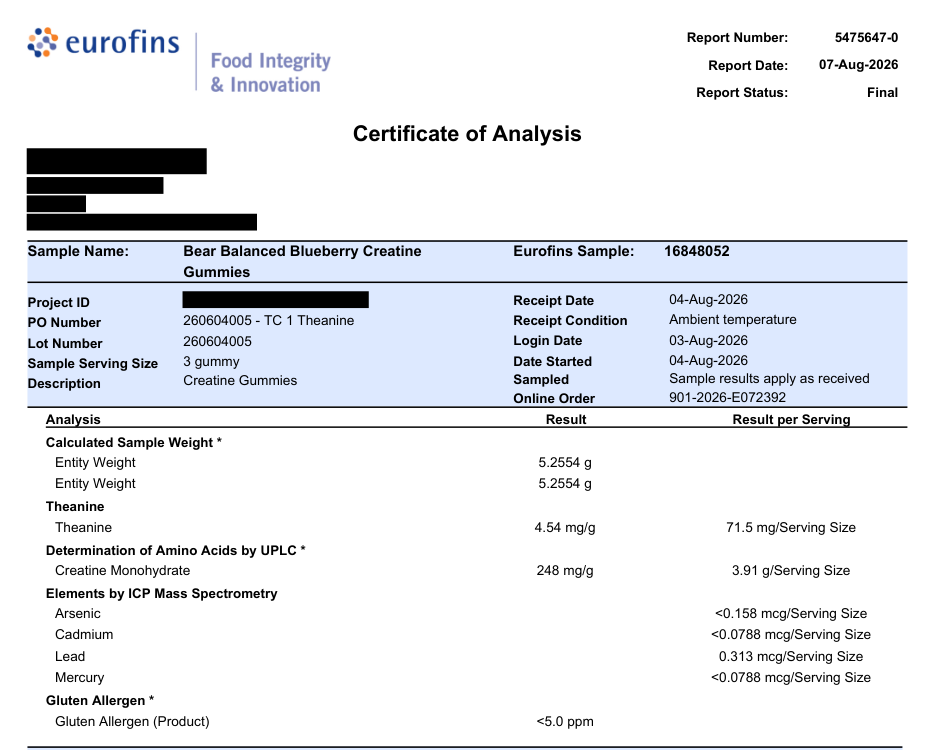
Blueberry · Lot 260604005
Meets label
3.91 gcreatine monohydrate per 3-gummy serving
Creatine breaks down in heat, moisture and acid, and all three live inside a gummy. Independent testing across the category keeps finding products that deliver a fraction of what their labels claim. We built our gummies, and our label, so that never applies to us.
Three decisions, made before the first batch, that the reports below put to the test.
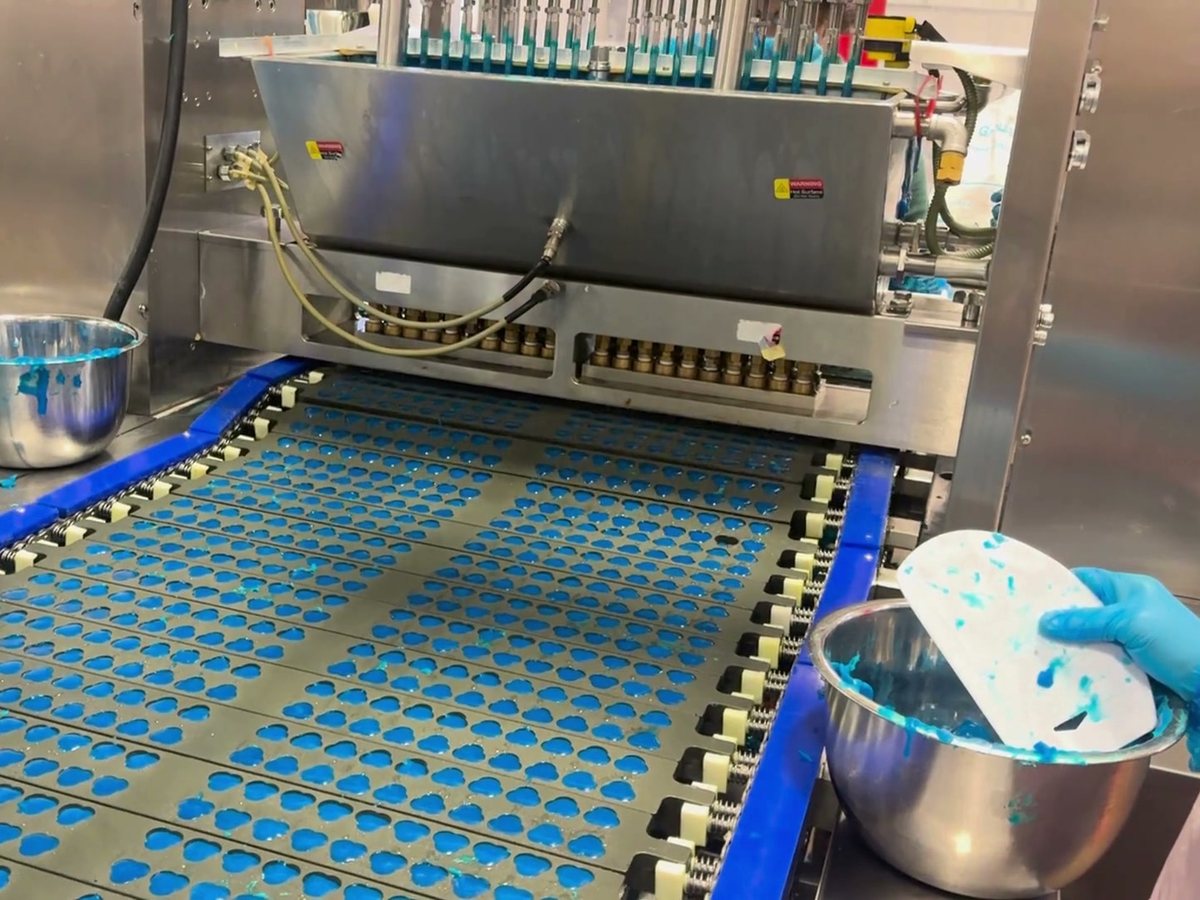
Each 3-gummy serving is made with more than 4 g of Creapure® creatine monohydrate against a 3.5 g label. The extra is margin for stability, so the gummy in your hand months after it was made still meets the label.
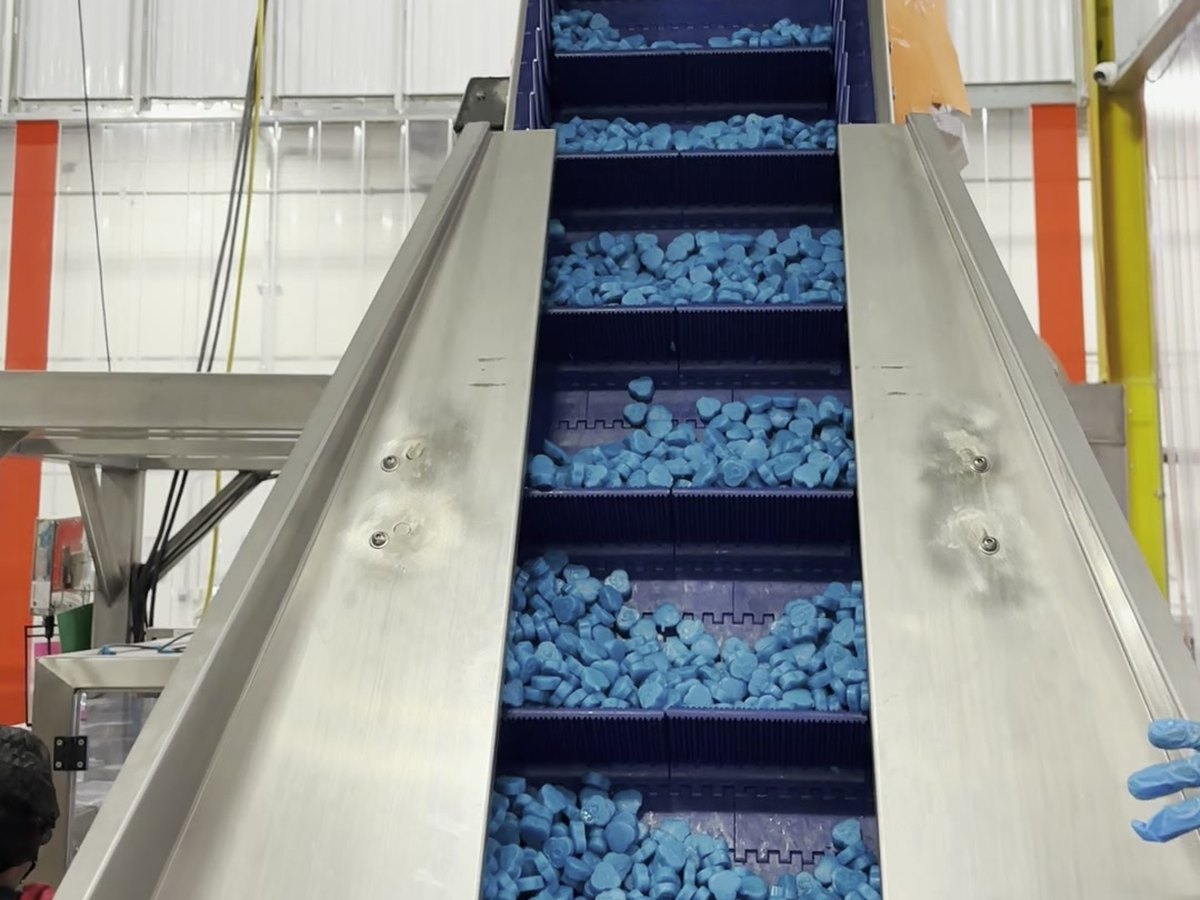
Creapure® certifies the raw material. Eurofins tests the gummy you eat, per serving, after it has been cooked, set and packed. That is the number that matters.
Not a badge. The documents, as issued by the lab. Our contract manufacturer's name and address are redacted; nothing else is altered.
Finished product, tested at a 3-gummy serving. Click any report to open the original PDF.
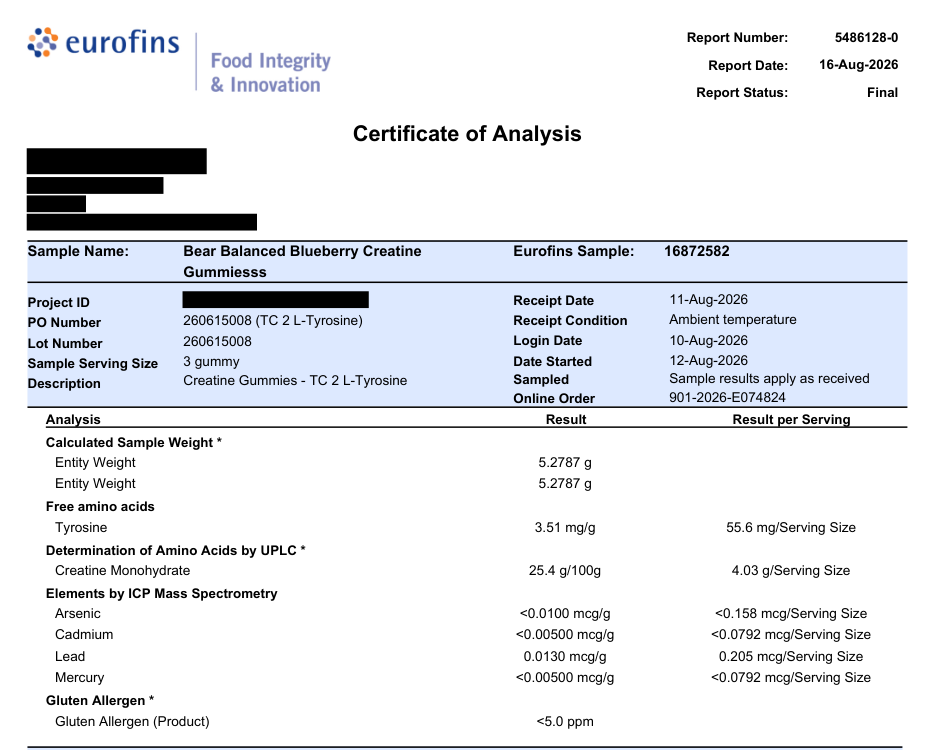
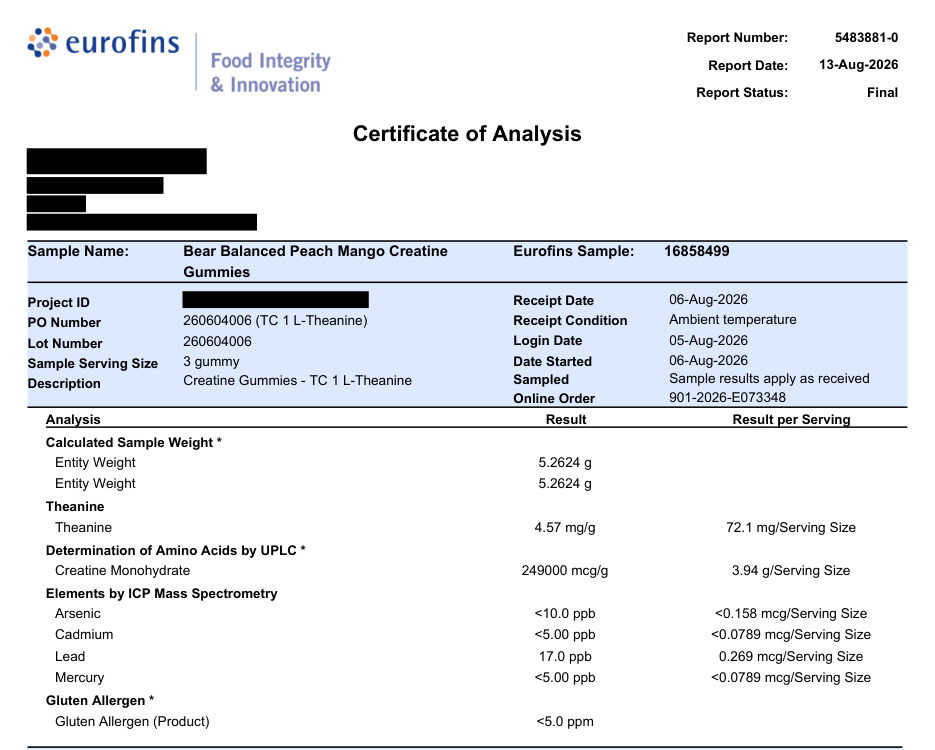
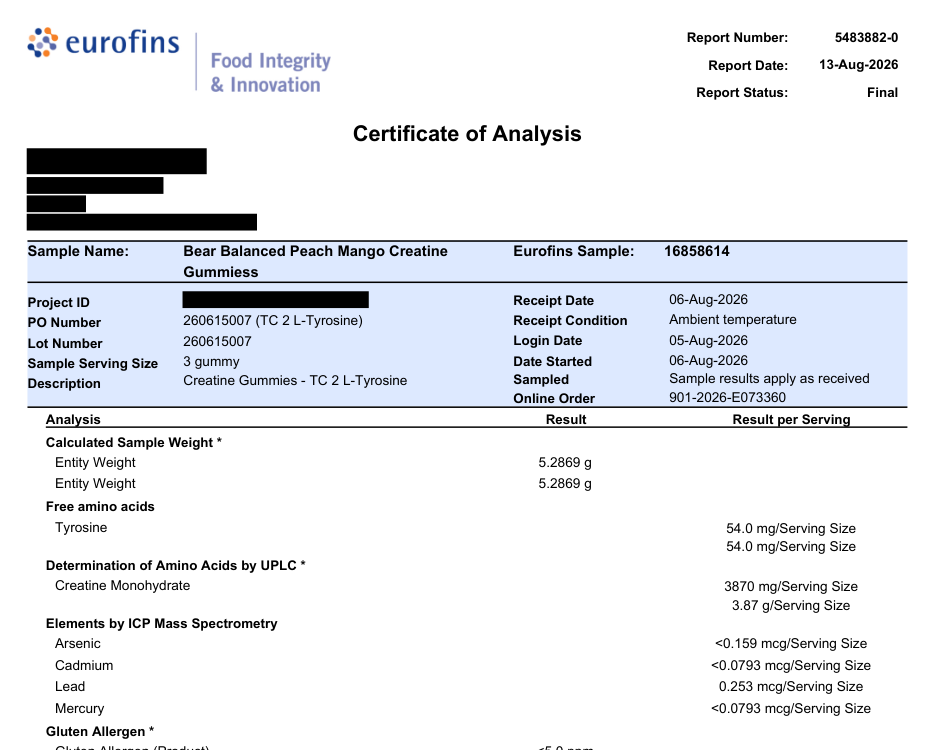
Results reflect laboratory analysis of the lots listed, as reported by Eurofins. We test new lots on a rolling basis and this page is updated as reports come in.
Under half of California's Prop 65 daily limit of 0.5 mcg. Arsenic, cadmium and mercury below detection.
Below the 20 ppm threshold the FDA uses for a gluten-free claim, on every lot.
Against a 50 mg label claim.
Against a 50 mg label claim.

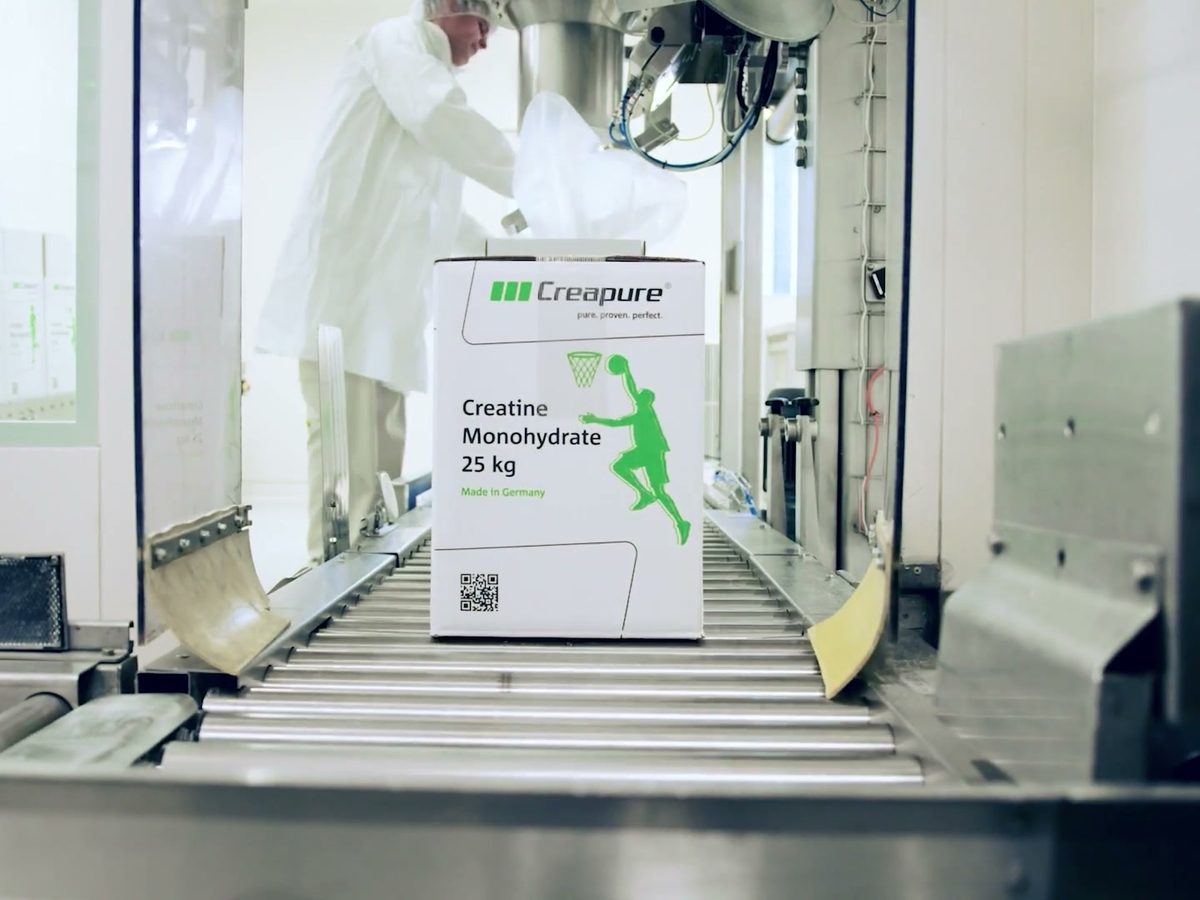
Creapure® is creatine monohydrate made by AlzChem in Germany, with its own purity certification. That tells you the ingredient going in is clean. It doesn't tell you how much survived the trip into a gummy. That's why the Eurofins results above are the ones that matter.
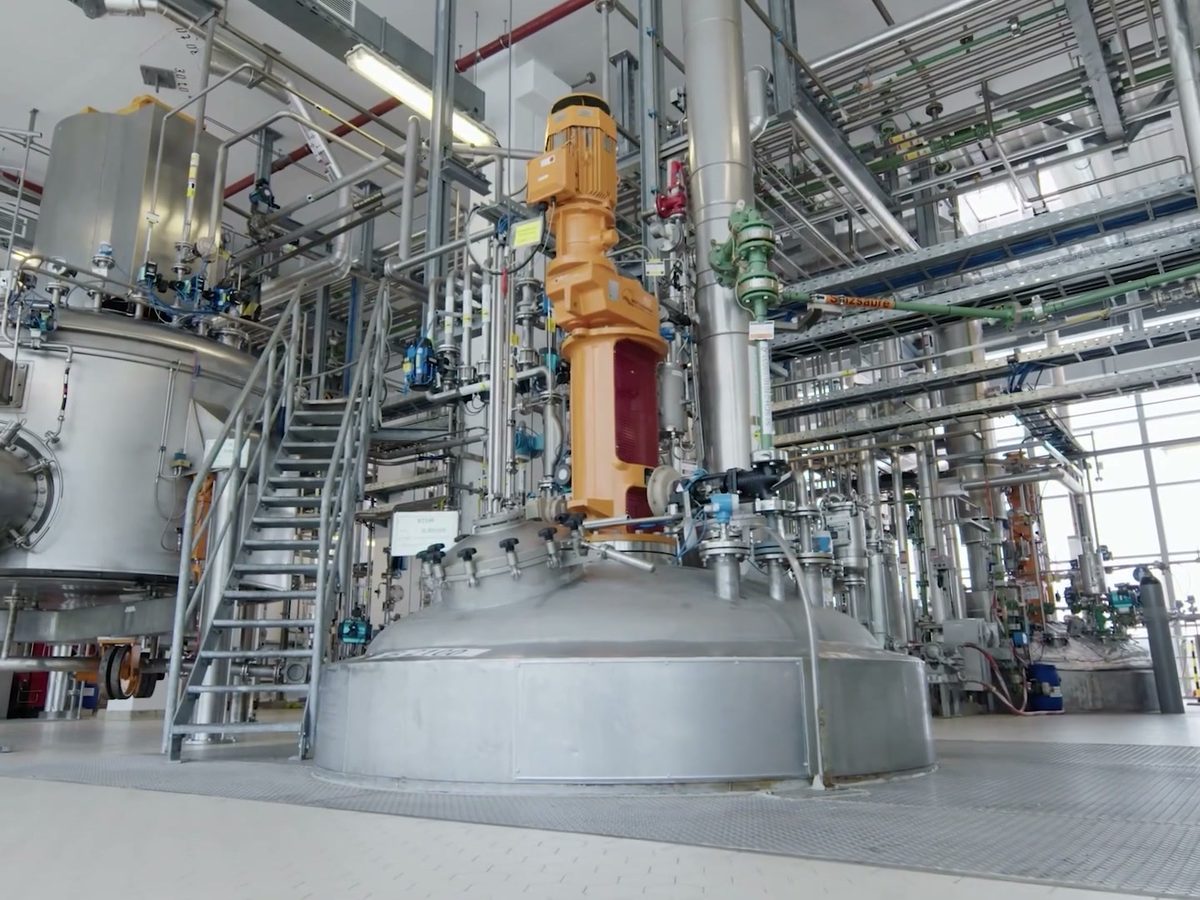
Creapure® creatine monohydrate is made at AlzChem's plant in Trostberg, Bavaria, under drug-manufacturing standards. From there it goes into our gummies at a cGMP-registered facility in the United States, and every lot is released only after the finished-product results come back.

Our formulation and testing approach is reviewed by our Scientific Advisory Board.

Professor of Health and Human Performance, Nova Southeastern University. Founder and CEO of the International Society of Sports Nutrition. Widely regarded as the "Founding Father of Creatine Research."

Co-Founder of Clinically Pressed. Director of Sports Medicine Research, Mayo Clinic Health System. Certified Strength and Conditioning Specialist (NSCA). ISSN Certified Sports Nutritionist.

Clinical Exercise Physiologist. Associate Professor of Physical Education, Brandon University, Canada. Adjunct Professor of Kinesiology and Health Studies, University of Regina.
If it isn't answered here, email us the lot number printed on your bag and we'll send you that lot's report.
Creatine monohydrate is stable as a dry powder. Inside a gummy it sits in moisture, mild acid and the heat of cooking, and over time some of it converts to creatinine, which does nothing for you. Brands that fill to the label with no margin, or never test the finished gummy, end up shipping less than the label says.
The label says 3.5 g of creatine monohydrate per 3-gummy serving. Eurofins measured 3.91 g in that lot, which is 112% of the claim. Every lot we have tested lands between 111% and 115%, because we make each serving with more than 4 g and let stability take its margin.
Yes. Each card links to the certificate of analysis exactly as Eurofins issued it. The only edit is that our contract manufacturer's name and address are blacked out. Report numbers, sample IDs, methods and results are untouched, and Eurofins can confirm a report number on request.
Yes. 3.87 to 4.03 g per serving is in the range of a standard daily creatine intake, and well below the amounts used in loading protocols in the research literature. The overfill exists so the gummy still meets its label months after it was made, not to push a higher amount.
Eurofins is one of the largest independent testing laboratories in the world, with food and supplement labs across the US. Our samples went to the Food Integrity & Innovation labs in Madison, Wisconsin and Brea, California. They have no commercial relationship with Bear Balanced beyond running the tests.
It's printed on the back of the bag near the best-by date. Email it to us and we'll reply with that lot's Eurofins report.
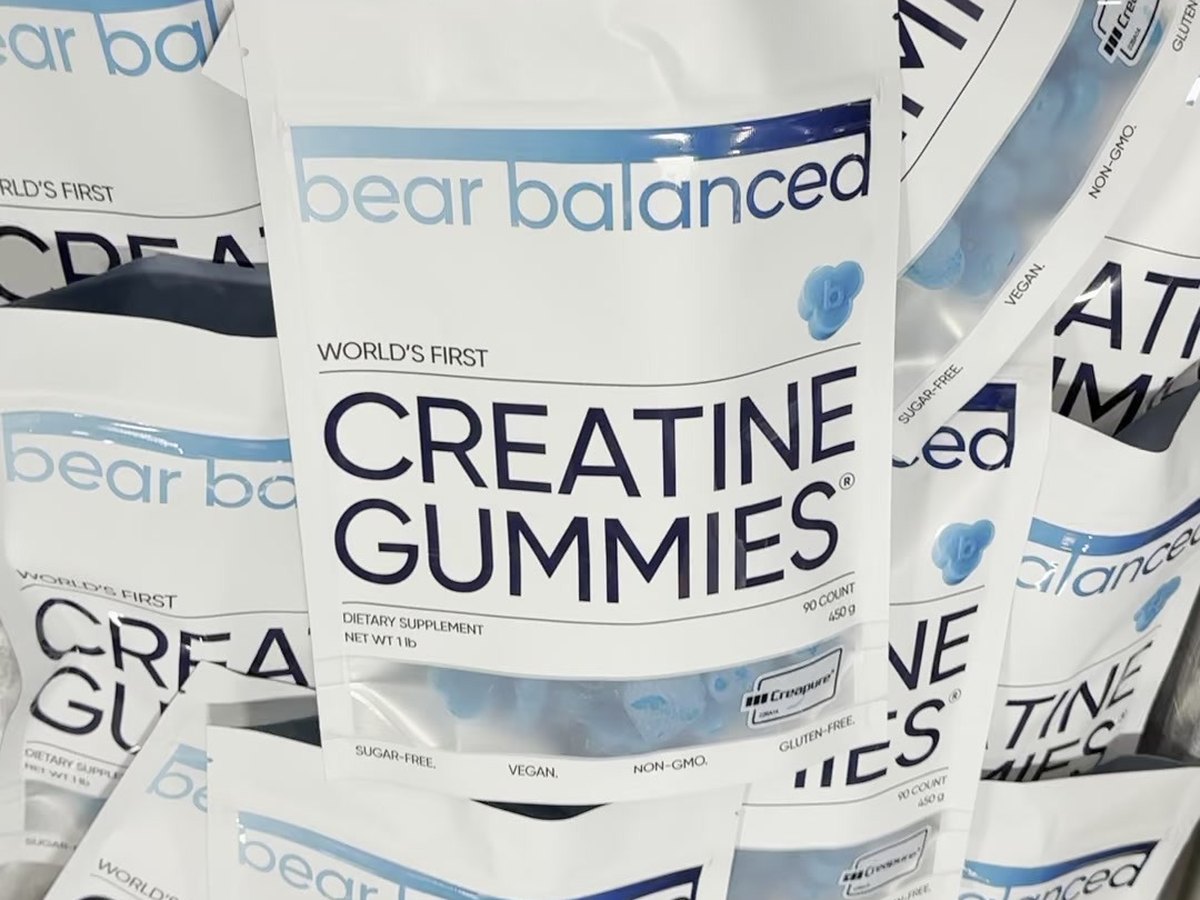
Same lots, same Creapure® creatine monohydrate. Blueberry or Peach Mango, 90 gummies per bag.
Shop Creatine Gummies
